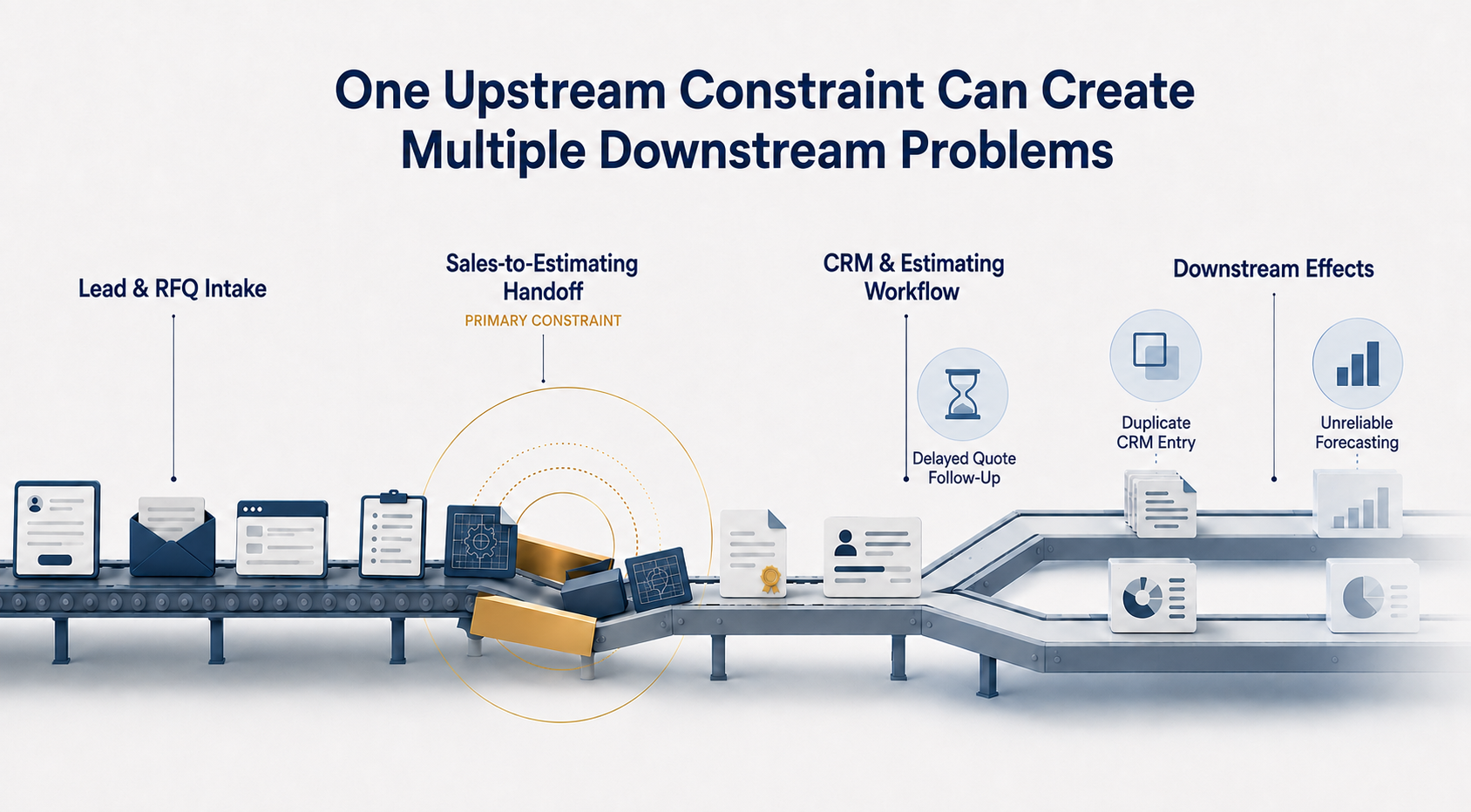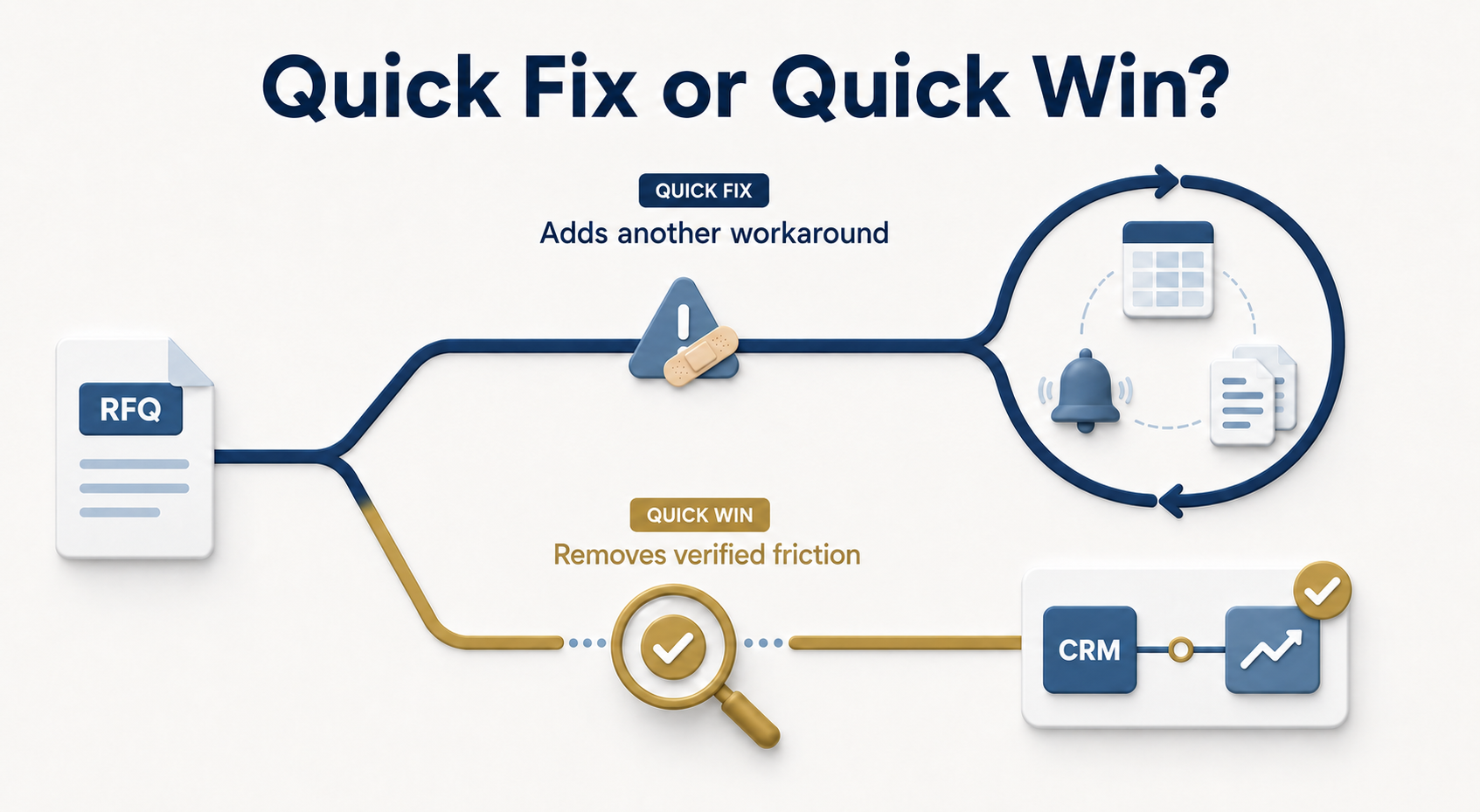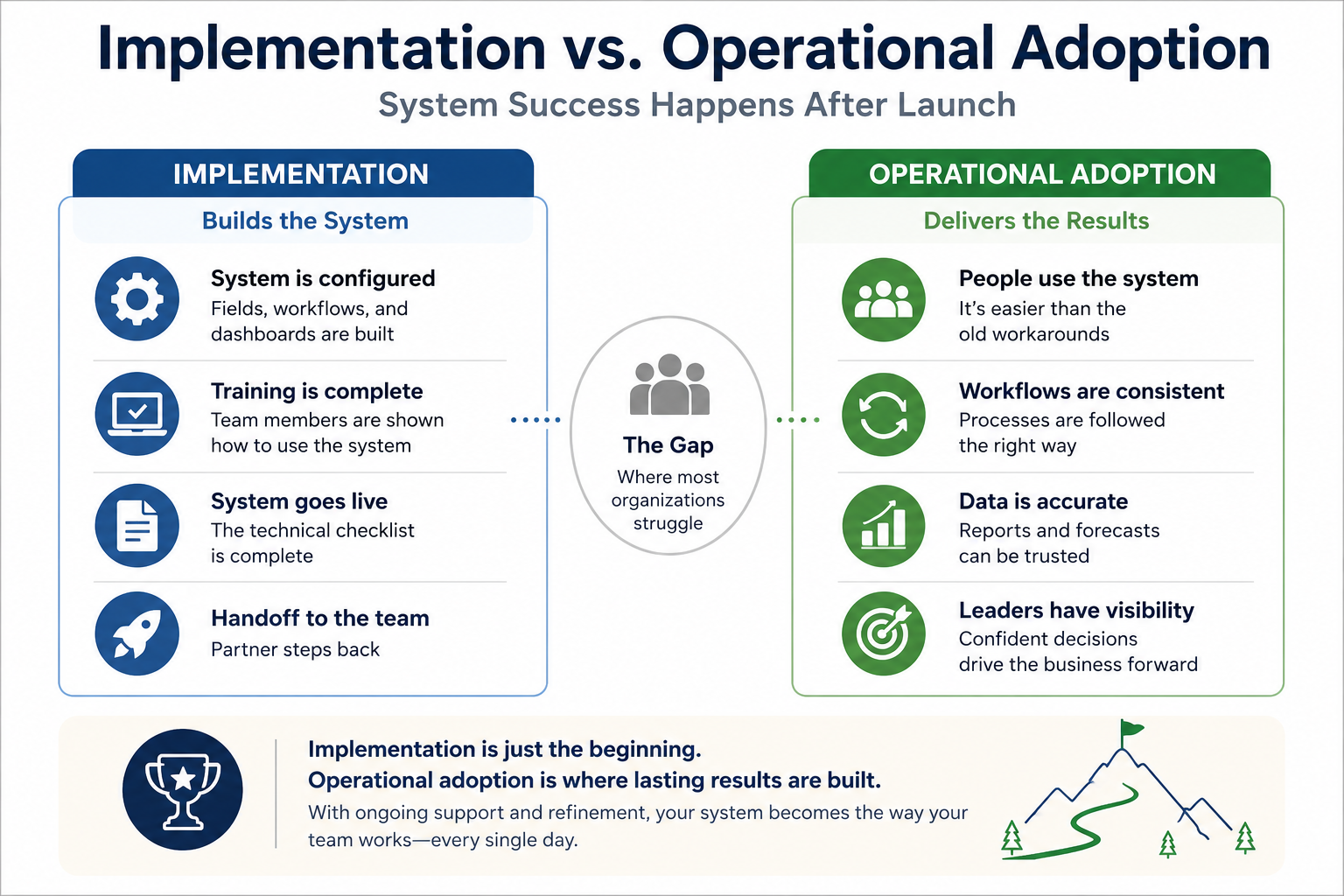
What Operational Stability Feels Like When Adoption Actually Sticks
Operational stability doesn’t usually arrive with a big announcement. It shows up in the small ways the day gets lighter. People stop asking where things live. Leaders trust the numbers.
That’s the shift: less friction, less second-guessing, more forward motion.
It’s not that the business suddenly becomes simple. It’s that the system stops adding unnecessary drag to everything people are trying to do. Once that happens, the tone of the organization starts to change. There’s a quieter kind of confidence that appears when teams no longer have to fight the process just to get through the day. They know what happens next. They know who owns what. They know where to look for information. That kind of clarity is not dramatic, but for the people living inside the system, it changes everything.
For manufacturing leaders, that’s when the realization hits: you didn’t just implement a piece of software. You built a better way to run the business.
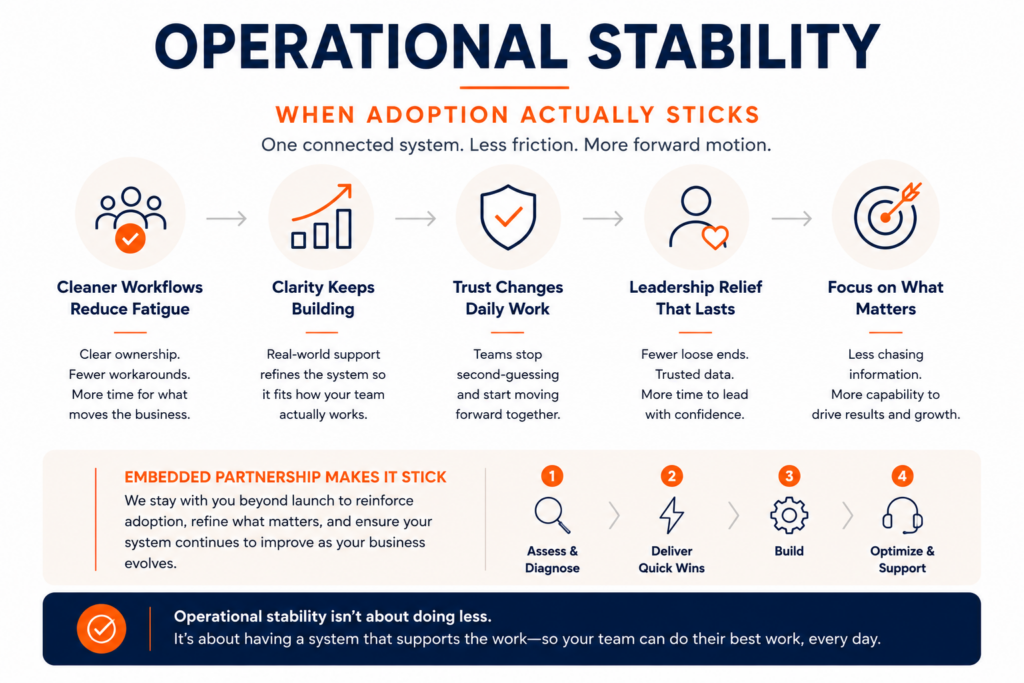
Cleaner Workflows Reduce Fatigue
A lot of workplace fatigue doesn’t come from the work itself. It comes from the extra effort required to work around a messy system. When workflows are inconsistent, people start compensating in small ways. They keep extra notes on the side. They create private spreadsheets. They send follow-up messages that shouldn’t have been necessary.
None of those things seem major in isolation. Together, they create a constant drain. That’s the hidden cost of a system that’s technically in place but not fully working the way it should. Cleaner workflows reduce that burden. Ownership becomes clearer. Workflows become predictable. Information moves consistently from one team to the next. They reduce the number of decisions that have to be made on the fly.
A sales rep can move an opportunity forward without wondering if the handoff is going to stall. A marketing manager can trust that information is where it should be. A leader can stop checking behind every step just to make sure the process held together.
That’s what One Connected Revenue System looks like in practice. People spend less energy compensating and more energy contributing. That consistency reduces interruptions, eliminates repetitive questions, and creates something many organizations haven’t experienced in years: Calm. Not because business has slowed down. Because the system has stopped getting in the way.
Why Clarity Keeps Building After Launch
Operational clarity doesn’t happen all at once. It keeps getting stronger after launch, especially when teams get support beyond the initial rollout. Adoption doesn’t happen in a conference room. It happens in live conditions when priorities change, when a process gets tested, when someone new joins the team, or when a customer situation doesn’t fit the typical path.
That’s when the system either starts to hold or starts to slip. A workflow that worked in planning may need a small adjustment once the team is using it every day. A handoff that seemed obvious may turn out to need more structure. A reporting process may work technically but still create confusion if the team does not trust it enough to use it consistently.
That’s why support after launch matters so much. The system gets stronger when it’s refined in use. Teams need room to ask questions, identify friction, and adjust the process so it fits the way the business actually works. Without that support, people tend to drift back toward old habits. With it, the system becomes more useful and more durable over time. This is where a lot of organizations misunderstand the job. They think the hard part ends when the system goes live. In reality, that’s when the real work of adoption starts to reveal itself.
What Trust Changes In Daily Work
Once people trust the system, behavior shifts. They stop building side systems. They stop relying on memory and side notes. They stop trying to keep the business moving through workarounds that only one or two people understand. Instead, they use the shared process because it’s easier than creating their own version.
Trust also changes the atmosphere inside the team. People spend less time asking basic process questions and more time solving real problems. Handoffs feel smoother because everyone is working from the same structure. Meetings become more useful because they’re about what to do next, not whether the information is accurate enough to believe. When the system is trusted, the team stops treating it like an extra task and starts treating it like part of the work. That shift is subtle but powerful. It means the system is no longer something people have to manage on top of their jobs. It’s helping them do their jobs better.
What Leadership Relief Really Looks Like
For leaders, this is where the payoff becomes especially visible. Instead of chasing missing updates, they can focus on the decisions in front of them. Instead of validating every report, they can trust what they’re seeing. Instead of worrying whether the process will hold this week, they can lead with more confidence. That’s a different kind of relief. It feels like fewer loose ends. Fewer corrections. Fewer moments where leadership has to step in and fix something the system should have handled.
Leadership’s time is valuable. The more time spent managing the system, the less time available to lead the business. Every report that needs to be checked manually adds friction to decision-making. Every workaround that survives after launch becomes one more source of drag. When the revenue system is stable, that burden starts to lift. You see it in meetings that move faster because the data is consistent. You see it in forecast conversations that are about strategy instead of verification. You see it when managers spend less time answering the same process questions over and over.
When operational stability happens, the whole business feels different. Work is still demanding. Problems still come up. Priorities still shift. But the process underneath it is steadier, and that steadiness creates room to think, decide, and lead with more confidence.
What Sustainable Growth Starts To Feel Like
Operational stability does more than improve daily execution. It creates a foundation that can support growth without turning every new step into chaos. When a revenue system is working well, new employees ramp faster because the expectations are clearer. Cross-functional collaboration gets easier because everyone is operating from the same structure.
Leaders spend less time explaining how things should work because the process itself already shows people what to do. The business can absorb change without having to reinvent the workflow every time something shifts. That’s what sustainable growth starts to feel like.
A business that can keep moving forward because the structure underneath it is steady enough to support what’s next. It gives the business a way to handle change without unraveling each time something new comes in.
Over time, the system becomes less visible because it’s doing its job well. Teams stop thinking about the workflow and start thinking about the customer. Leaders stop questioning the report and start making the decision. That steadiness matters because growth doesn’t make operations simpler. It makes them more complex. More people. More customers. More decisions. A connected system helps your business handle that complexity without creating more friction.
The Real Payoff
The goal was never just to launch a new and improved system. The goal was to build a revenue system that becomes part of how the business operates instead of something everyone has to keep working around. Teams feel less stretched. Leaders feel less reactive. That’s what operational stability really feels like.
Schedule a Systems Conversation to explore how a stronger, more connected revenue system can help your organization operate with greater clarity, confidence, and consistency.