The Calm Manufacturing Leaders Gain From One Unified Revenue View
Too many manufacturing leaders spend Sunday evenings, or the hours before a board meeting, trying to reconcile reports that tell different stories.
- Is the pipeline actually healthy?
- Are deals slowing because of lead quality, inconsistent sales follow-up, or a breakdown during customer onboarding?
- Can you confidently stand behind the forecast you’re presenting?
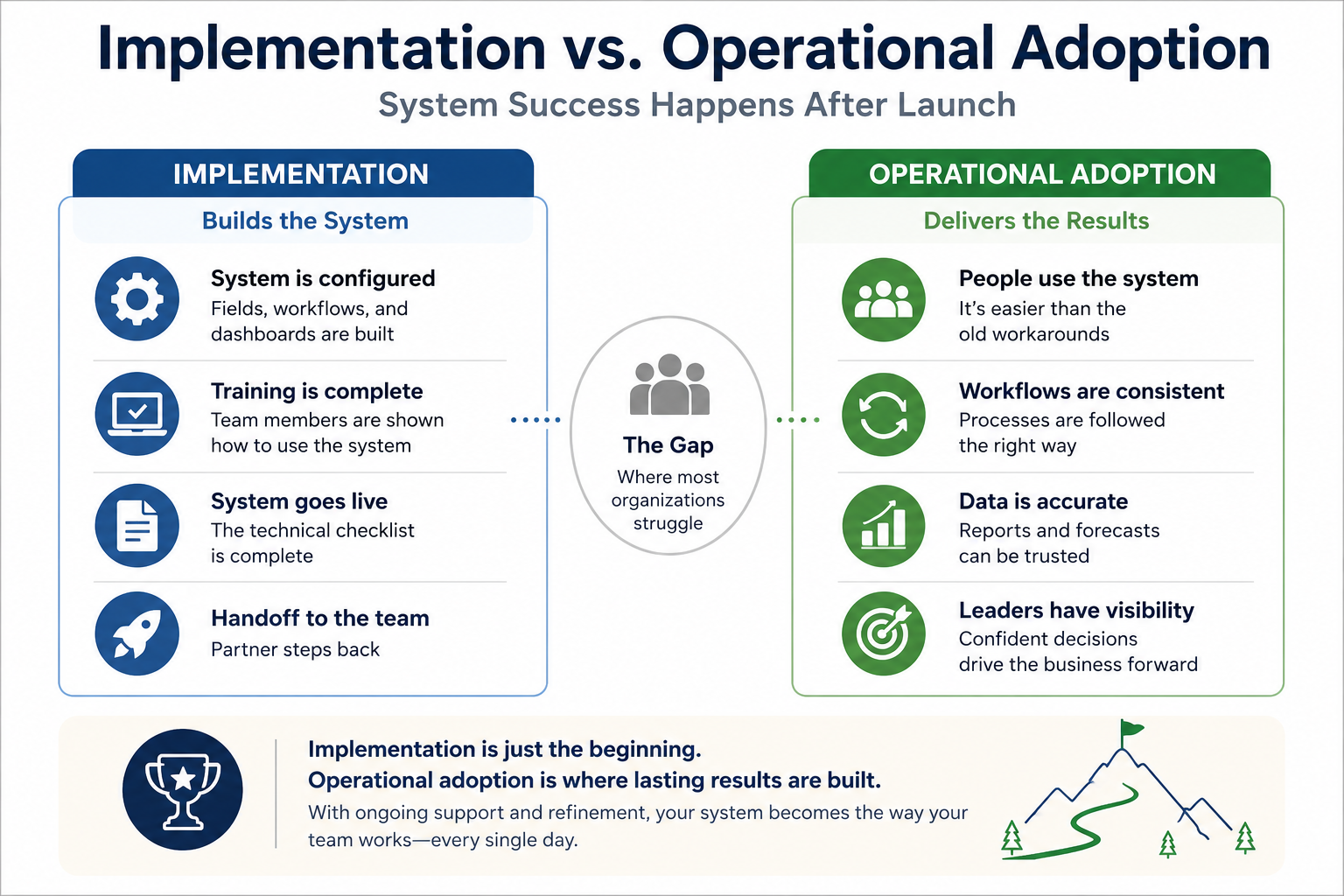
For many manufacturers, answering those questions takes a lot more work than it should, not because the data doesn’t exist, but because it’s scattered across departments and disconnected systems. When sales, marketing, and customer service work from the same information, leaders gain a clear picture of revenue performance. Instead of chasing answers, they can focus on making better decisions.
Clarity Replaces Guesswork
When sales, marketing, customer service, and leadership all have the same view of the business, conversations change. Instead of debating whose numbers are correct, conversations shift toward solving problems and identifying opportunities.
Everyone has a clearer view of:
- Where customers are in the buying journey
- Who owns the next step
- Which opportunities are moving forward and which are stalled
- How each department is contributing to revenue
The result isn’t just better reports. Meetings become more productive, handoffs become smoother, and teams spend less time validating data and more time moving the business forward.
Eliminating Reporting Friction
Reporting friction rarely comes from a lack of data. It comes from systems that collect information differently, define success differently, and rarely communicate with one another. Marketing measures performance one way. Sales manages opportunities another. Customer service tracks customer activity somewhere else.
Leadership is left trying to connect the dots before making important decisions. Imagine a major OEM opportunity that appears healthy in the CRM. Meanwhile, customer service is dealing with unresolved implementation issues, while marketing is focused on generating new opportunities. Each team is doing its job, but leadership doesn’t see the complete picture until the opportunity is already at risk. When systems are connected, leaders no longer have to piece the story together manually.
Instead of asking, “Whose spreadsheet is right?” leaders can ask, “Where is revenue slowing, why is it happening, and what should we do next?”
That’s where organizations get their time back. Every hour spent reconciling reports is an hour that could have been spent improving operations, serving customers, or planning for growth.
One View. Better Decisions.
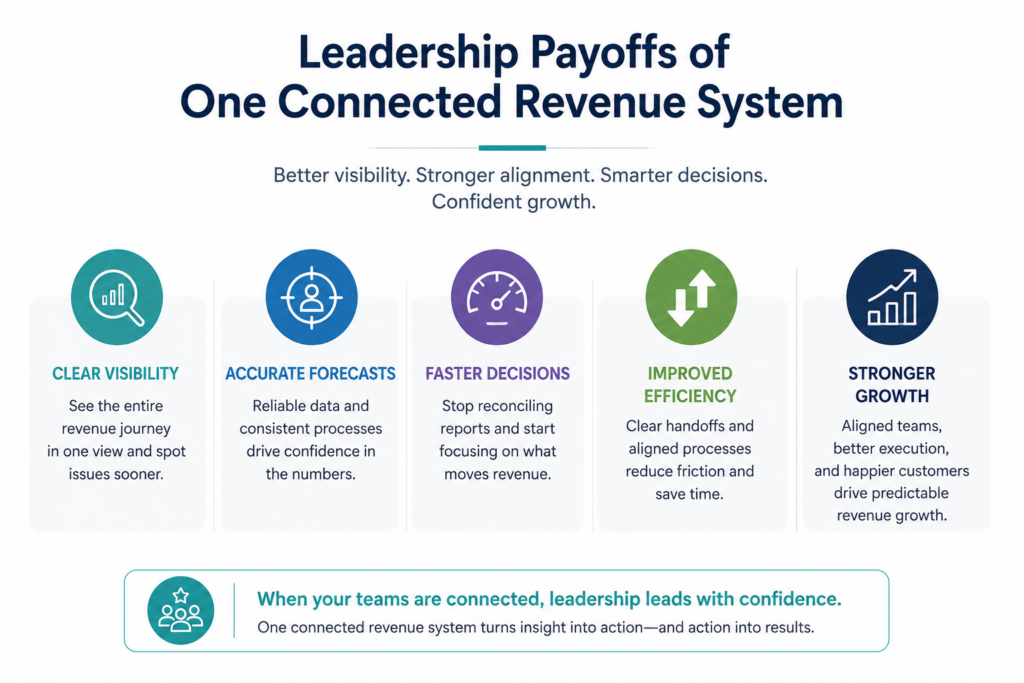
A unified revenue view doesn’t mean every department uses the same dashboard. It means each team’s dashboard is built from consistent, reliable information. That gives leaders visibility into how opportunities move from one team to the next, making it easier to spot weak handoffs, delayed follow-up, and emerging risks before they affect revenue.
Instead of comparing reports, leaders can focus on questions like:
- Where are opportunities slowing down?
- Which customers or accounts need immediate attention?
- Which markets or processes deserve more investment?
- What small operational change could create the biggest revenue impact?
That’s the difference between managing information and using it to lead the business.
The Power of Shared Accountability
When teams work toward shared revenue goals, accountability naturally becomes collective instead of departmental. Sales, marketing, and customer service stop focusing only on their responsibilities and begin paying attention to the entire customer journey. If a handoff is missed or an opportunity begins to stall, everyone can see it sooner.
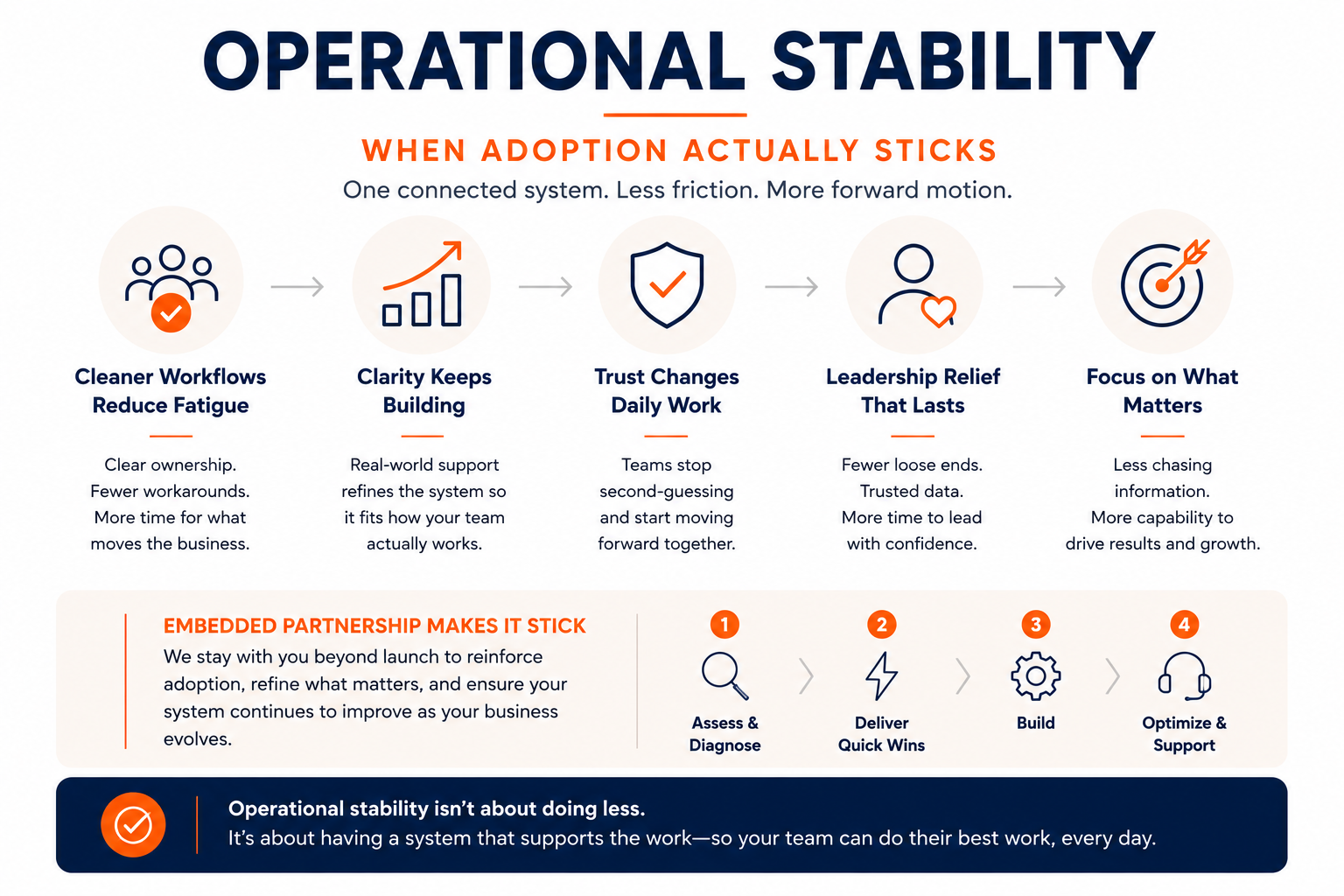
Ownership becomes clearer. Problems get addressed before momentum is lost. As disconnected workflows disappear, so does much of the manual work that comes with them.
In our manufacturing implementations, many organizations reduce manual CRM activity by 60–70% within the first 60 days. That’s more than a productivity gain. It’s evidence that the business is operating from a simpler, more connected system.
The Leadership Value of a Connected View
The biggest benefit isn’t better reporting. It’s the confidence to act. When leaders trust the numbers, meetings become shorter, decisions happen faster, and planning becomes more proactive. Instead of chasing data across multiple systems or questioning forecasts, they can focus on where revenue stands today and where it’s headed next.
That confidence shows up in several ways:
- Confidence in your forecasting: Your pipeline reflects what’s actually happening, making hiring, investment, and growth decisions easier.
- Confidence in your processes: Weak handoffs, delayed follow-up, and ownership gaps become visible before they become revenue problems.
- Confidence in your team: Everyone understands who owns the next step, making collaboration smoother and reducing missed opportunities.
- Confidence to lead strategically: Instead of diagnosing workflow problems, leaders spend more time focused on customers, operations, and the future of the business.
The result is greater clarity in your decisions, greater confidence in your direction, and the calm that comes from knowing your revenue system supports the business instead of slowing it down.
Let’s Start With a Conversation
If your leadership team spends more time reconciling reports than acting on them, the problem may not be the reports themselves. It’s often the systems, workflows, and ownership behind them. A Systems Alignment Conversation helps uncover where disconnected processes are creating unnecessary friction and identifies practical opportunities to create a more connected revenue operation.
Schedule a Systems Alignment Conversation and let’s identify where a more connected revenue system could make the biggest difference.