Implementation vs. Operational Adoption: Why System Success Happens After Launch
Many manufacturing leaders measure success by one milestone: The system is live.
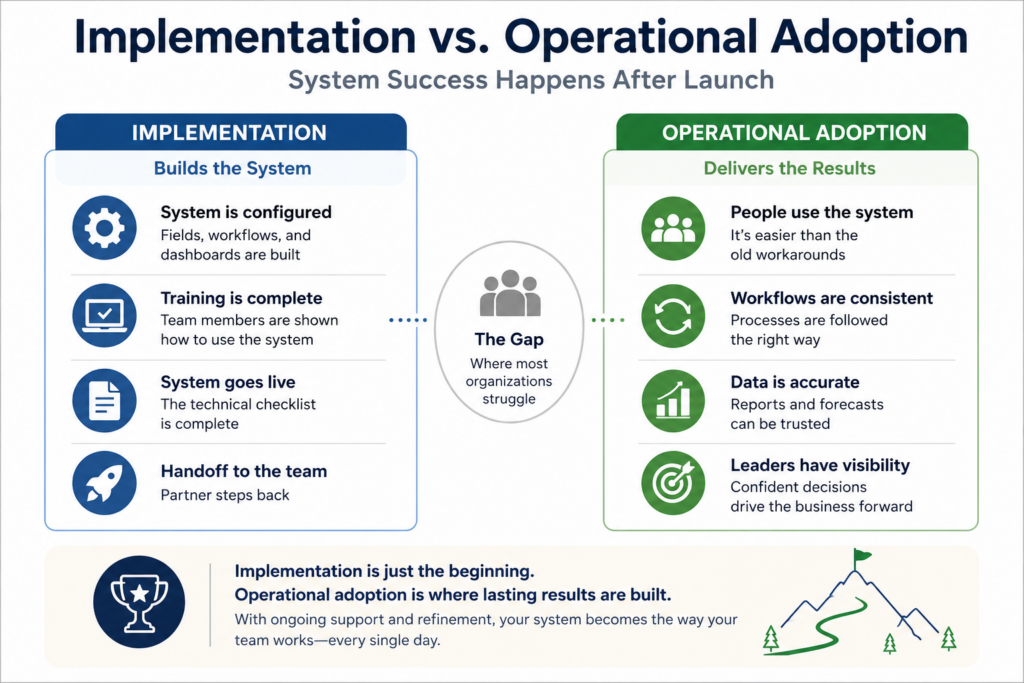
The CRM is configured. Workflows are built. Dashboards are in place. Training is complete. And the kickoff call ends with everyone nodding in agreement. The external partner provides a stack of documentation and marks the project complete.
Six weeks later, half the team is back in spreadsheets. Sales reps are re-entering customer data by hand. Managers are questioning reports they were excited about just a month earlier. The implementation succeeded. The adoption didn’t.
Implementation and operational adoption are two very different things, and confusing the two is one of the most common reasons revenue system improvements stall after launch. When leadership mistakes implementation for adoption, systems quickly fail. System success doesn’t rely on ticking off a technical checklist; it depends on usability, daily adoption, and ongoing refinement.
Implementation Delivers the System. Adoption Delivers the Results.
Implementation is the technical work: fields mapped, workflows configured, dashboards built. Operational adoption is the human work. The team is using the system the way it was designed to be used, not because they were told to, but because it’s easier than the workarounds they used to rely on.
Adoption isn’t a launch date. It’s a habit that has to be built, tested, and reinforced under real working conditions. A system can be fully implemented and still fail if the people touching it daily aren’t given the time, support, or practical reason to change how they work.
The question isn’t: “Did we implement the system?”
It’s: “Can our team confidently operate within it every single day?”
Adoption Requires More Than Training
Training teaches people how to use a system. Adoption reinforces why they continue using it. As teams work inside a new system, real questions come up:
- What happens when a process doesn’t fit a unique customer?
- Who owns the next step?
- Which workflow should we follow?
- How should we adjust when priorities change?
These aren’t software questions. They’re operational questions. Without ongoing guidance, every team answers them differently. That’s when inconsistency returns along with the friction the implementation was designed to eliminate.
The Risk of Handing Off Too Early
Here’s where many implementation projects fall short. The system gets handed off the moment it’s technically functional, with the assumption that a working system is a finished job. But a technically finished system is not the same as a durable one.
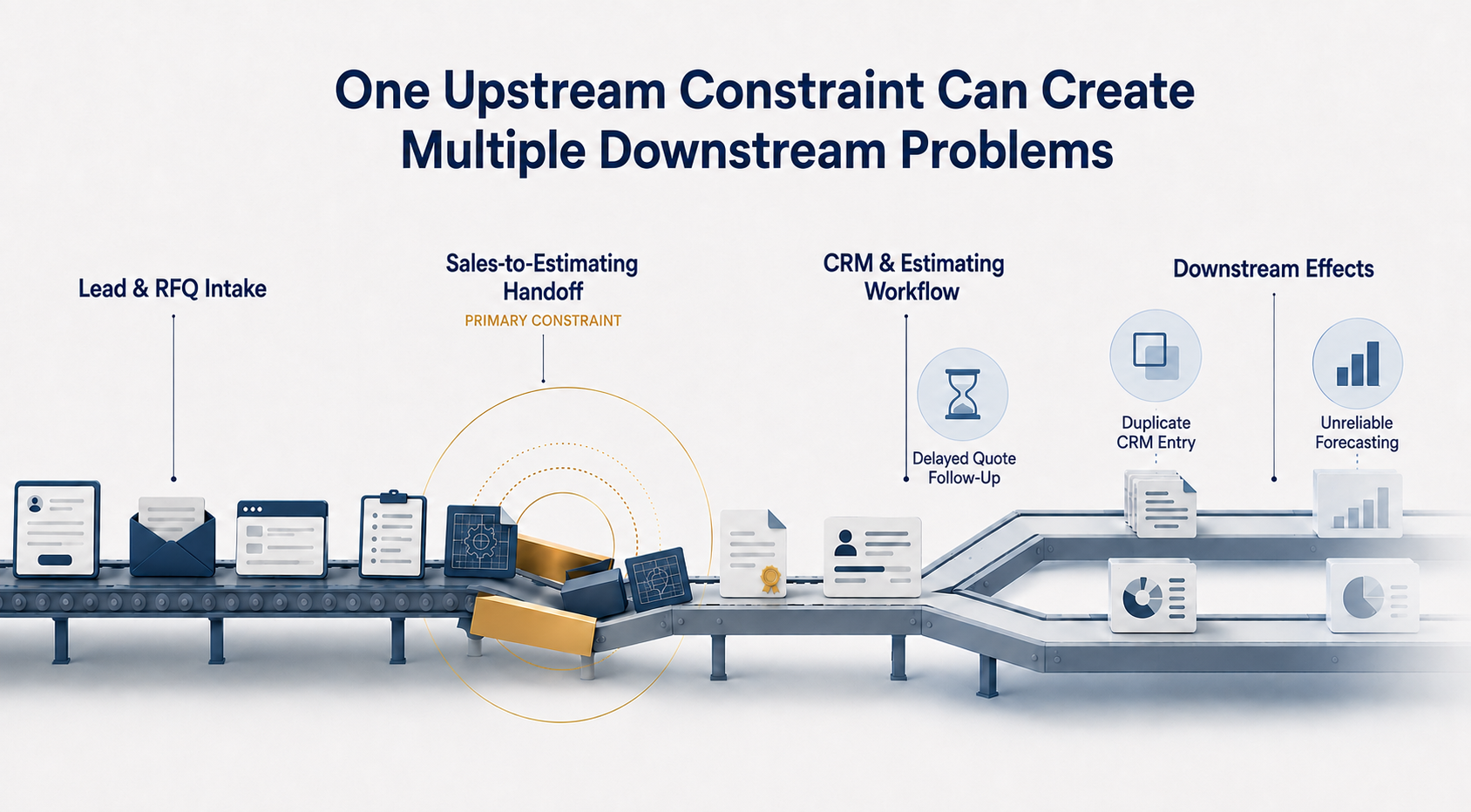
When support ends too early, small issues don’t get resolved. Teams are left to interpret the process on their own, managers start filling gaps, and old workarounds begin to creep back in. The result is inconsistent use, unreliable data, and a growing disconnect between the system leadership thinks it has and the one people are actually using.
The CRM Stops Being the Source of Truth
When the system creates more work instead of removing it, people stop updating it consistently.
Teams Return to Old Workarounds
Spreadsheets, private notes, and disconnected conversations quietly replace standardized workflows.
Leadership Loses Visibility
As the information becomes fragmented, forecasting becomes less reliable and decision-making slows. The technology didn’t fail. The organization never fully adopted it.
Why Embedded Partnership Works
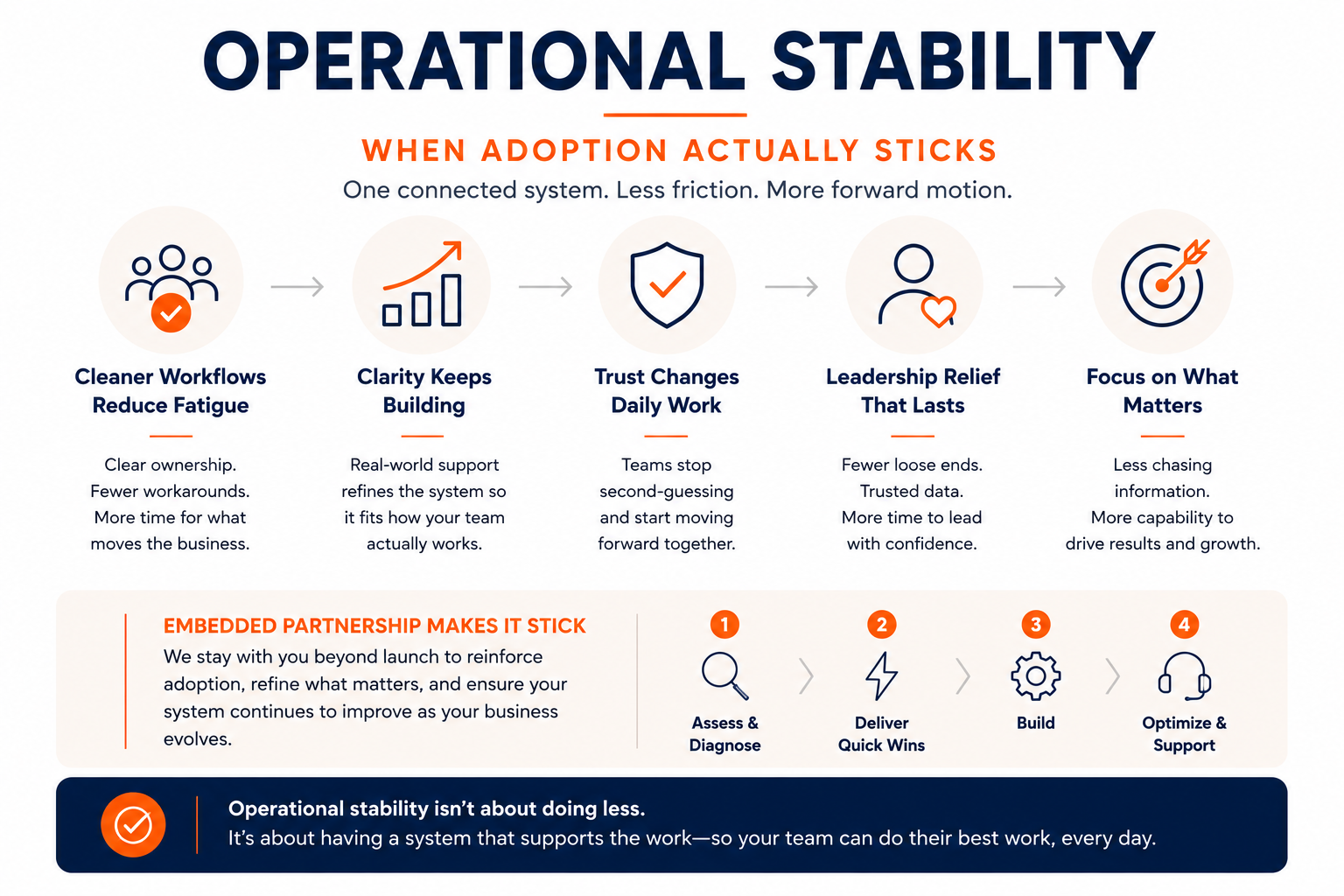
Change sticks when experts stay involved alongside your team through implementation, adoption, and ongoing support. An Embedded Partnership ensures support doesn’t end after going live:
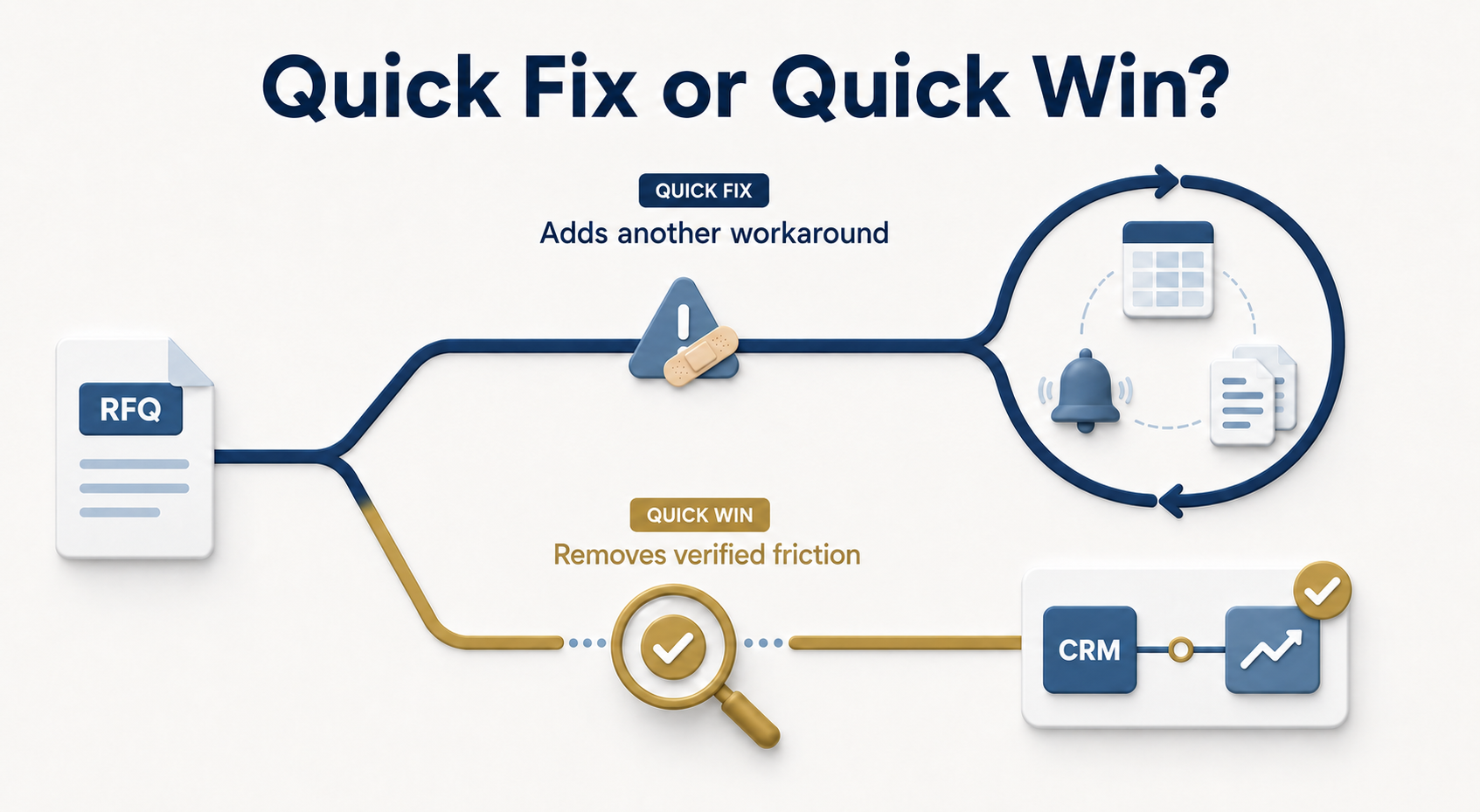
- Stabilizing Workflows in Real Time: As your team begins using the system, unexpected situations naturally come up. Ongoing support helps refine workflows so they fit how your team actually works.
- Building Confidence Through Early Wins: Addressing friction early helps teams see the value quickly. When manual CRM work drops by 60–70% within the first few months, confidence and adoption grow naturally.
- Keeping Teams Moving Forward: Continued guidance helps reinforce new ways of working, making it easier for teams to stick with the system instead of returning to old workarounds.
Instead of delivering a plan and stepping away, an embedded partner continues working with your team to identify friction, refine the system, and stay alongside your team until the new way of working become the normal way of working.
The Real Measure of Success
An implemented system isn’t the finish line. It’s the starting point. The teams that see lasting change are the ones who had support that didn’t stop at going live, and a system that kept getting refined against how work actually happens.
Eventually, something important happens. Teams stop asking whether they should use the new process; they just do. Reporting becomes consistent. Workflows become predictable. Leadership trusts the information they’re seeing.
Instead of validating reports or chasing updates, leaders can focus on making confident, strategic decisions that move the business forward. That’s the difference between installing software and building a revenue system your organization can rely on.
If your team has a system in place but isn’t fully using it, the gap probably isn’t the software. It’s what happened, or didn’t, after launch.
Ready to Build a System Your Team Will Actually Use?
The goal isn’t a perfect revenue system launch. It’s to build a system your team trusts, uses, and continues improving long after implementation is complete. It’s a system designed around your people, backed by a partner who stays alongside you until the new way of working is second nature.
If your team has a system in place but adoption is slipping, and you’re ready to build a system your team will actually use,