Why Trusted Visibility Creates Better Decisions, Better Forecasts & Less Operational Stress
Manufacturing leaders aren’t short on data. They’re short on confidence in the data.
And when leaders don’t trust the numbers, decisions slow down. The difference between proactive organizations and reactive ones often comes down to one thing: trusted visibility.
There’s a distinct shift in the room during a manufacturing pipeline review when the spreadsheet comes out. You’ve probably seen it happen. The meeting is supposed to focus on strategy. Instead, many begin with questions about whether the numbers are accurate.
- “How confident are we in this forecast?”
- “Why don’t Sales and Marketing have the same number?”
- “Which report should we trust?”
When visibility depends on spreadsheet cleanup and manual reconciliation, leadership isn’t managing the business. They’re auditing data. This isn’t a sales adoption problem or a data-entry problem. It’s a workflow design problem.
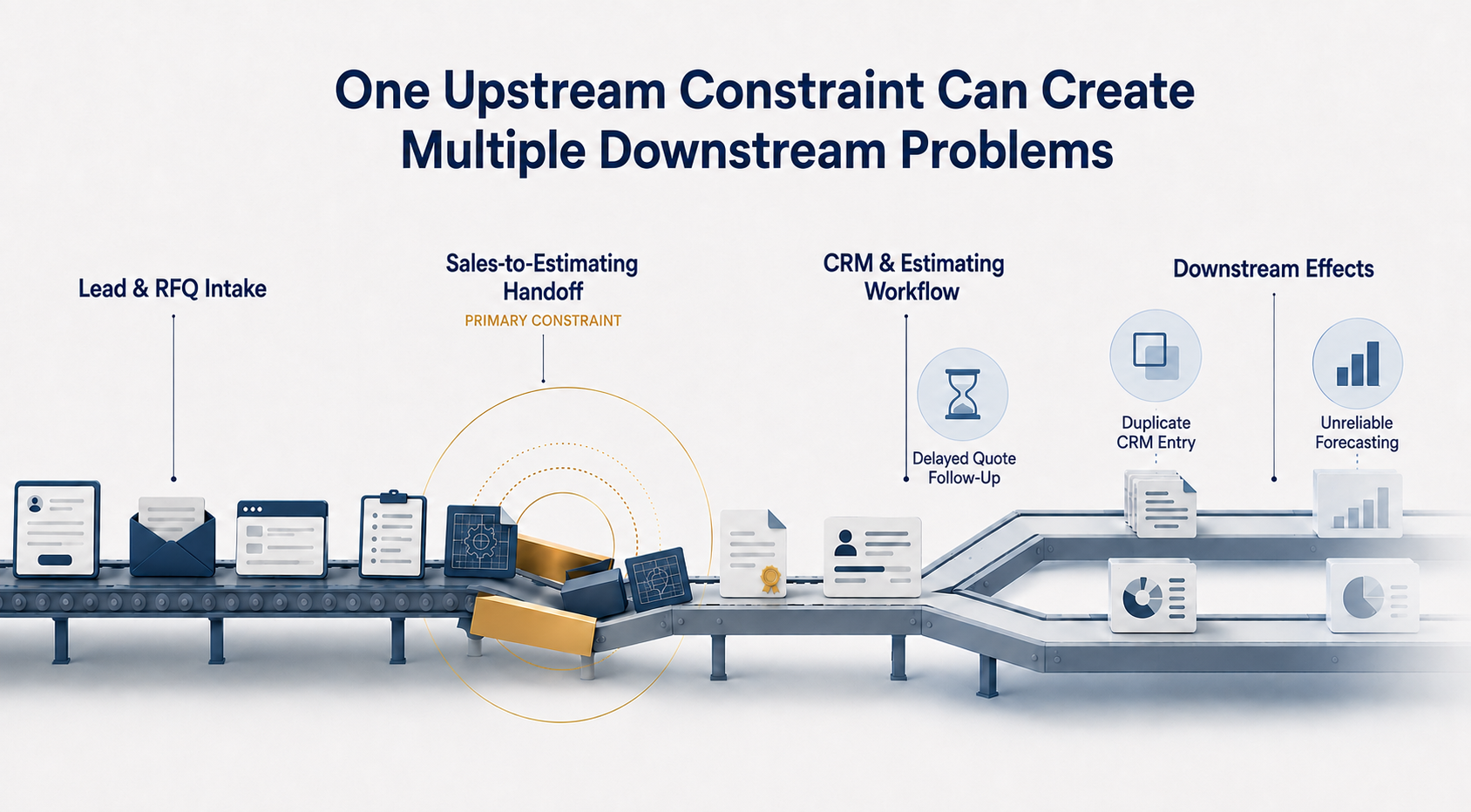
At Acadia, our core belief is simple: sales problems are system problems. Reporting friction, forecasting uncertainty, and operational blind spots rarely stem from a lack of effort. They happen because the systems behind the sale are disconnected.

Why Bad Reporting Creates Leadership Drag
When reporting cannot be trusted, leadership carries an invisible burden. Every decision requires verification. Every forecast includes caveats. Every meeting starts with reconciliation.
Signs Your Visibility Problem Is Becoming a Leadership Problem:
- Teams maintain separate spreadsheets
- Reports require manual reconciliation
- Different departments report different numbers
- Too much of the forecast data lives outside the CRM
- Leadership meetings start with validating data
- Strategic decisions get delayed
Each workaround makes sense on its own. But over time, they create a patchwork of processes where getting a clear picture requires a lot of manual effort. This creates executive hesitation. Instead of asking strategic questions like:
- Where are deals getting stuck?
- Which accounts need attention?
- What risks are emerging?
Leaders ask administrative questions:
- Is this report accurate?
- Are we looking at the same data?
- Which version is correct?
Those questions create operational drag. Momentum stalls. Opportunities sit unresolved. Growth slows.
From Verification to Confidence
The answer to forecasting uncertainty isn’t more software or complex dashboards. It’s visibility that consistently reflects reality. When everyone trusts the data, teams stop validating numbers and start focusing on execution.
When leaders don’t trust the numbers, they naturally become overly cautious. While caution feels responsible in the moment, it carries significant operational costs:
- Capital expenditures get delayed.
- Hiring plans get postponed.
- Equipment purchases wait another quarter.
- Expansion initiatives remain unresolved.
For manufacturing organizations with long sales cycles and complex production planning, hesitation compounds quickly. A delayed decision today often becomes a missed opportunity six months from now. To break that cycle, leadership must shift the environment from educated guessing to absolute knowing.
The Operational Shift: Guessing vs. Knowing
| Guessing | Knowing |
| Decisions delayed | Decisions accelerated |
| Defensive forecasts | Confident forecasts |
| Reactive planning | Proactive planning |
| Spreadsheet validation | Strategic discussion |
| Leadership friction | Leadership confidence |
| Operational noise | Clear direction |
When leaders trust reporting, teams align around the same information, decisions happen faster, and forecasting becomes reliable because confidence in the data removes the need for constant verification.
Most Companies Don’t Have a Data Problem
Many organizations have plenty of information. Far fewer have visibility. Information tells you what happened. Visibility tells you what matters right now.
A CRM can contain thousands of records, dozens of reports, and multiple dashboards. That doesn’t automatically create leadership clarity. True visibility exists when leaders can immediately answer critical questions:
- What is moving through the pipeline right now?
- What has stalled?
- Which opportunities need executive support?
- What capacity risks should we prepare for?
- Where are future revenue constraints forming?
The conversation shifts from: “Can we trust these numbers?” to “What should we do next?”
That’s where operational improvement begins. Visibility isn’t knowing what happened last month. It’s knowing what requires action right now.
Forecasting Doesn’t Fail; Systems Do
Forecasting is often treated as a separate discipline. It isn’t. Forecast quality is a direct reflection of workflow quality.
If leaders question the underlying information, every forecast becomes an exercise in educated guessing. The challenge is rarely the forecast itself. It’s the health of the system behind it. Reliable visibility allows leaders to allocate resources earlier, hire with greater confidence, stabilize production schedules, and anticipate future demand.
Forecast reviews become decision-making sessions instead of reconciliation exercises.

The Operational Confidence Every Leadership Team Wants
One outcome manufacturing leaders consistently describe isn’t cleaner dashboards. It’s relief. It’s walking into meetings focused on decisions instead of verifying the numbers. The leadership team stops chasing information. The system provides it. This is operational calm. Not the absence of complexity. The absence of uncertainty.
Manufacturing organizations will always manage:
- Long sales cycles
- Multiple stakeholders
- Technical buying processes
- Cross-functional handoffs
Complexity is normal. Uncertainty doesn’t have to be. The purpose of a systems-led approach isn’t to simplify your business. It’s to create enough visibility to manage complexity with confidence.
Find Out Where Visibility Is Breaking Down
At Acadia, we take an engineer-founded, systems-first approach to uncover the workflow friction, reporting gaps, and operational blind spots limiting leadership confidence. That’s the difference between guessing and knowing.
If forecasting feels uncertain, reporting requires constant validation, or pipeline reviews turn into data audits, the issue is rarely the forecast itself. It’s usually a sign that friction exists somewhere in the revenue system.
The Revenue System Gap Finder is a five-minute assessment designed to help sales and marketing leaders identify:
✔ Workflow breakdowns that slow decision-making
✔ Visibility gaps between teams and systems
✔ Manual reporting and spreadsheet dependencies
✔ Forecasting uncertainty caused by information living outside the system
✔ Hidden operational costs created by disconnected processes
In just a few minutes, you’ll gain a clearer picture of where leadership confidence is being lost. Download the Revenue System Gap Finder and uncover the gaps limiting visibility, forecasting accuracy, and operational confidence.