Many organizations invest heavily in branding, marketing campaigns, websites, and content, only to discover later that their systems can’t support the level of targeting, personalization, or visibility marketing actually needs.
The issue usually isn’t the platform.
It’s the disconnect between sales, marketing, and data.
This becomes especially common when a new marketing leader joins an organization. They inherit systems like HubSpot or Salesforce that may have been implemented years earlier, often with a strong sales or operational focus. Meanwhile, marketing is trying to answer entirely different questions:
- Who are our best customer segments?
- Which audiences should receive different messaging?
- How do we separate current customers from prospects?
- What industries or verticals are growing?
- Which accounts are inactive or underserved?
- Where are the best upsell opportunities?
Without the right structure underneath the data, marketing struggles to move beyond broad messaging and disconnected campaigns.
The Mistake Many Companies Make
One of the most common mistakes organizations make is treating CRM systems as:
- “The sales team’s tool”
- “The marketing email system”
- “A reporting platform”
- “A database”
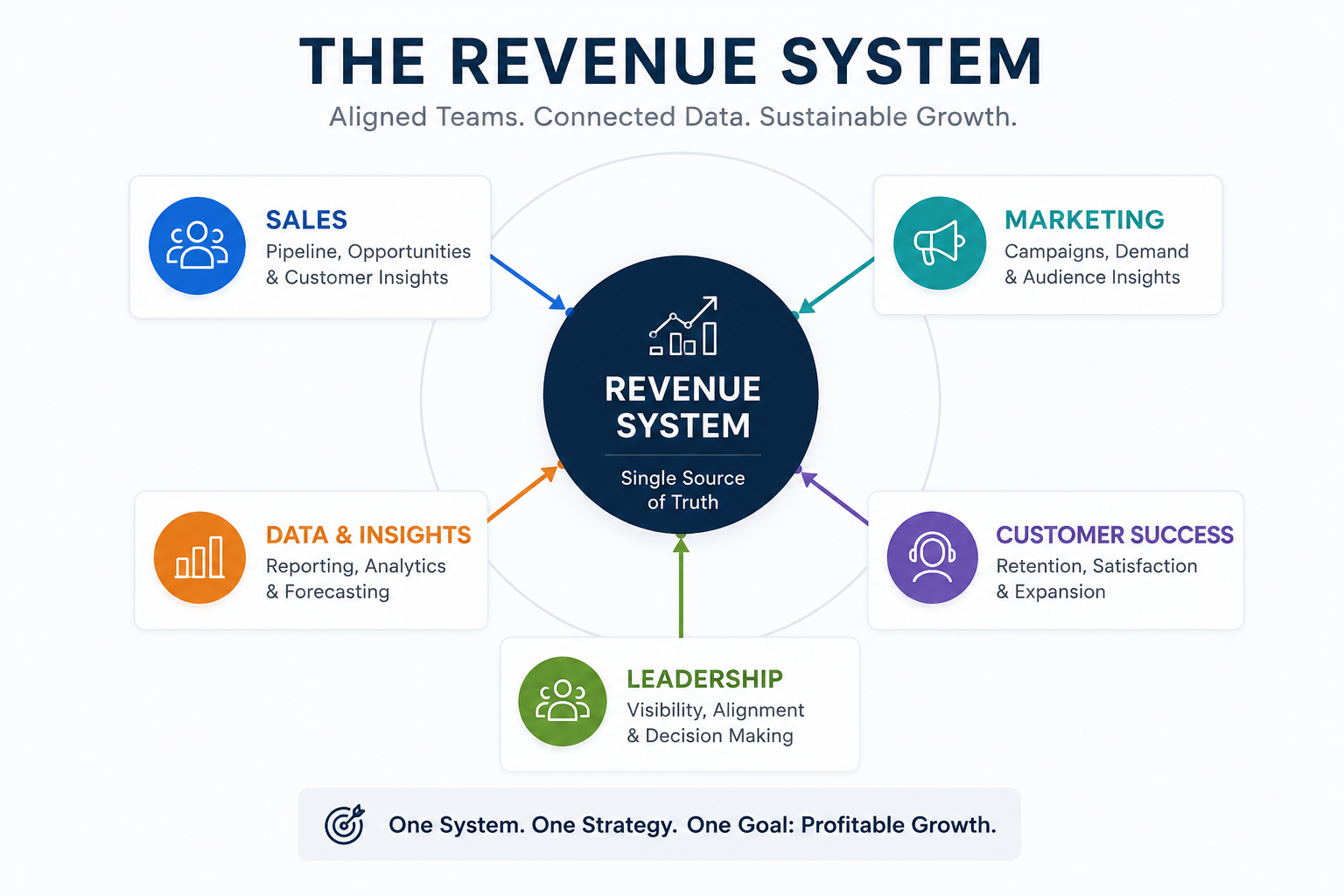
In reality, these systems sit at the center of the revenue operation.
When marketing isn’t connected to how sales defines accounts, opportunities, customer stages, and relationships, the data often becomes difficult to use strategically.
For example:
- Existing customers and prospects may not be clearly separated
- Industries may not be categorized consistently
- Customer lifecycle stages may be unclear
- Agency relationships may not be identified
- Geographic territories may be incomplete
- Renewal or reactivation opportunities may be invisible
The result?
Marketing teams are forced to create broad campaigns instead of targeted strategies.
Why Sales Needs to Be Included Early
Bringing sales into the conversation isn’t about assigning blame or “cleaning up bad data.”
It’s about capturing institutional knowledge.
Sales teams often understand:
- how accounts are structured
- how relationships really work
- which opportunities matter most
- where the buying cycles exist
- how customers are categorized internally
Much of that knowledge never fully makes it into the CRM.
That’s why collaborative working sessions between sales and marketing are so valuable. The basics of this include:
Separating Current Customers from Prospects: This alone can dramatically improve campaign targeting and messaging relevance.
Industry or Vertical Segmentation: Especially important for organizations serving multiple markets or customer types.
Lifecycle Visibility: Understanding how sales defines opportunities, active customers, renewals, and inactive accounts helps marketing support the full customer journey.
Customer Marketing Opportunities: Many companies focus heavily on acquisition while overlooking opportunities to:
- retain customers
- reactivate dormant accounts
- expand existing relationships
- support renewals
- improve customer communication
These are often some of the fastest revenue opportunities available.
CRM Strategy Is Really Revenue Strategy
The most successful organizations stop viewing CRM systems as “software projects.”
Instead, they treat them as operational frameworks that connect:
- sales
- marketing
- customer experience
- reporting
- and growth strategy
Technology alone doesn’t solve alignment problems. But when sales, marketing, and leadership work together to define how information should flow through the organization, platforms like HubSpot become significantly more valuable. Not because of automation. Not because of dashboards. But because the organization finally has visibility into how revenue actually moves through the business.
Final Thought
Marketing leaders today are being asked to do far more than build awareness. They’re being asked to contribute to growth strategy, customer intelligence, and measurable business outcomes. That requires more than great branding. It requires alignment between people, process, and data. Because the most effective marketing systems aren’t built around campaigns. They’re built around how the business actually grows.